Retaining Walls & Concrete Masonry
We design and build concrete retaining walls that hold back soil, control erosion, and protect your property for decades in Hayward, CA.
Why a Retaining Wall Is a Serious Investment
A retaining wall is not just a landscaping feature. It is a structural element that holds back thousands of pounds of soil and manages the way water moves through your property. When a retaining wall fails, the results can include slope erosion, damage to driveways and walkways, undermined foundations, and in serious cases, significant land movement that threatens structures.
Hayward sits at the edge of the East Bay hills, and many properties in the area have sloped lots, cut-and-fill grading, or hillside terrain that creates real pressure against retaining walls. The soil in this region also expands and contracts with seasonal moisture changes, which puts ongoing stress on walls that are not built with proper drainage and the right structural design.
Getting this right the first time is far cheaper than dealing with a failed wall. We engineer retaining walls to handle the specific conditions of your site, including soil type, wall height, surcharge load from structures or vehicles above the wall, and drainage requirements. A wall we build is built to last, not just to look good right after installation.
Types of Retaining Walls and Masonry We Build
The right type of wall depends on how much soil it needs to hold, what is behind and above it, and what you want it to look like. Here is a breakdown of the main options we work with.
Poured Concrete Walls
Solid poured concrete is the strongest option for walls that need to hold significant soil loads or support structures above. We form, reinforce, and pour these walls to engineered specifications. They require professional design for walls over 4 feet tall in California.
Concrete Block (CMU) Walls
Concrete masonry unit walls are built with hollow concrete blocks that are filled with grout and reinforced with vertical rebar. They are durable, versatile, and can be faced with stucco, stone veneer, or left with a clean block face depending on the look you want.
Segmental Retaining Wall Blocks
Interlocking concrete blocks like Versa-Lok and Allan Block are stacked without mortar and rely on their weight and interlocking shape to resist soil pressure. These are well-suited for residential retaining walls up to about 4 feet tall without requiring a permit in most cases.
Garden Walls and Landscape Masonry
Shorter decorative concrete masonry walls for garden borders, raised planters, and landscape terracing. These do not always carry structural loads but still need to be built correctly to stay level and resist the pressure from the soil behind them.
Drainage Is the Key to a Wall That Lasts
The number one reason retaining walls fail is poor drainage. When water has nowhere to go, it builds up behind the wall, increases the pressure the wall has to resist, and over time causes it to crack, lean, or collapse. Every retaining wall we build includes a proper drainage system designed to move water away from the wall and prevent that pressure from building up.
Here is what goes into every retaining wall project we take on.
- Site assessment including soil conditions, wall height, and what is above and below the wall.
- Engineering review or structural engineering plan for walls over 4 feet or with surcharge loads.
- Excavation and base preparation with compacted gravel footing.
- Crushed rock drainage layer installed behind the wall from base to near the top.
- Perforated drain pipe at the base of the wall to carry water away from the structure.
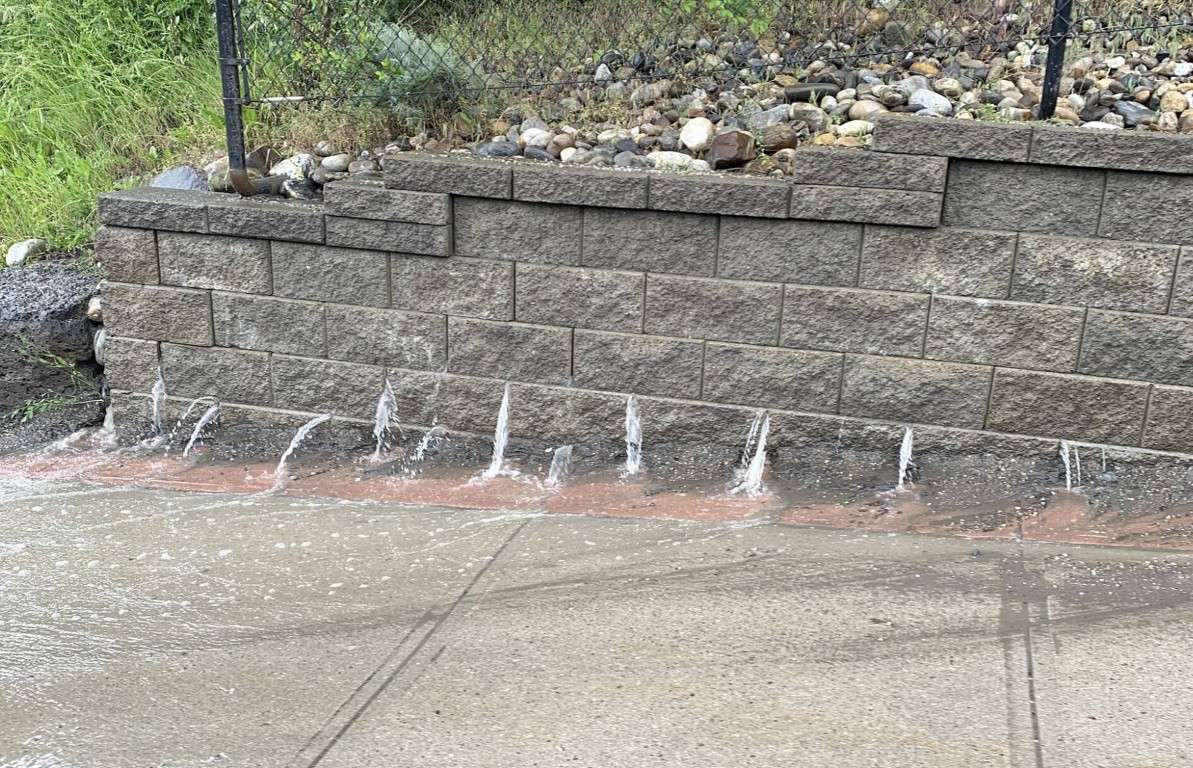
- Weep holes or drain outlets at the face of the wall at regular intervals.
- Proper wall construction with full reinforcement per the design.
- Backfill with compacted gravel rather than native soil behind the drainage layer.
- Final grade and slope away from the top of the wall to manage surface runoff.
When Is a Permit Required?
In Hayward and throughout California, a building permit is generally required for any retaining wall over 4 feet in height measured from the bottom of the footing. Walls that support a surcharge load, such as a vehicle, a structure, or a hillside above, may require a permit regardless of height. We handle the permit research and application as part of the project, and we work with a structural engineer when the design requires it.
Replacing a Failed Wall
If an existing retaining wall is leaning, cracking, or starting to move, it needs to be addressed before it fails completely. We assess the condition of the existing wall and the drainage situation behind it. In most cases, the old wall needs to come down completely so we can correct the drainage and build a new wall on a proper base. A wall that is simply pushed back into place without fixing the drainage will fail again.
We also handle concrete foundation and slab work for projects that include a retaining wall and a structure on the leveled pad behind it, such as a garage, workshop, or ADU.
Common Questions About Retaining Walls
How tall can a retaining wall be without an engineer?
What causes a retaining wall to lean or crack?
Can I build a retaining wall on the property line?
Need a retaining wall built or replaced in Hayward, CA?
Call us or send a message to schedule a free site visit and estimate. We assess the drainage, soil conditions, and structural requirements before giving you a quote. Visit our home page to see all the concrete services we offer, including concrete walkways and flatwork for the area around your wall.
Call (341) 386-0015